
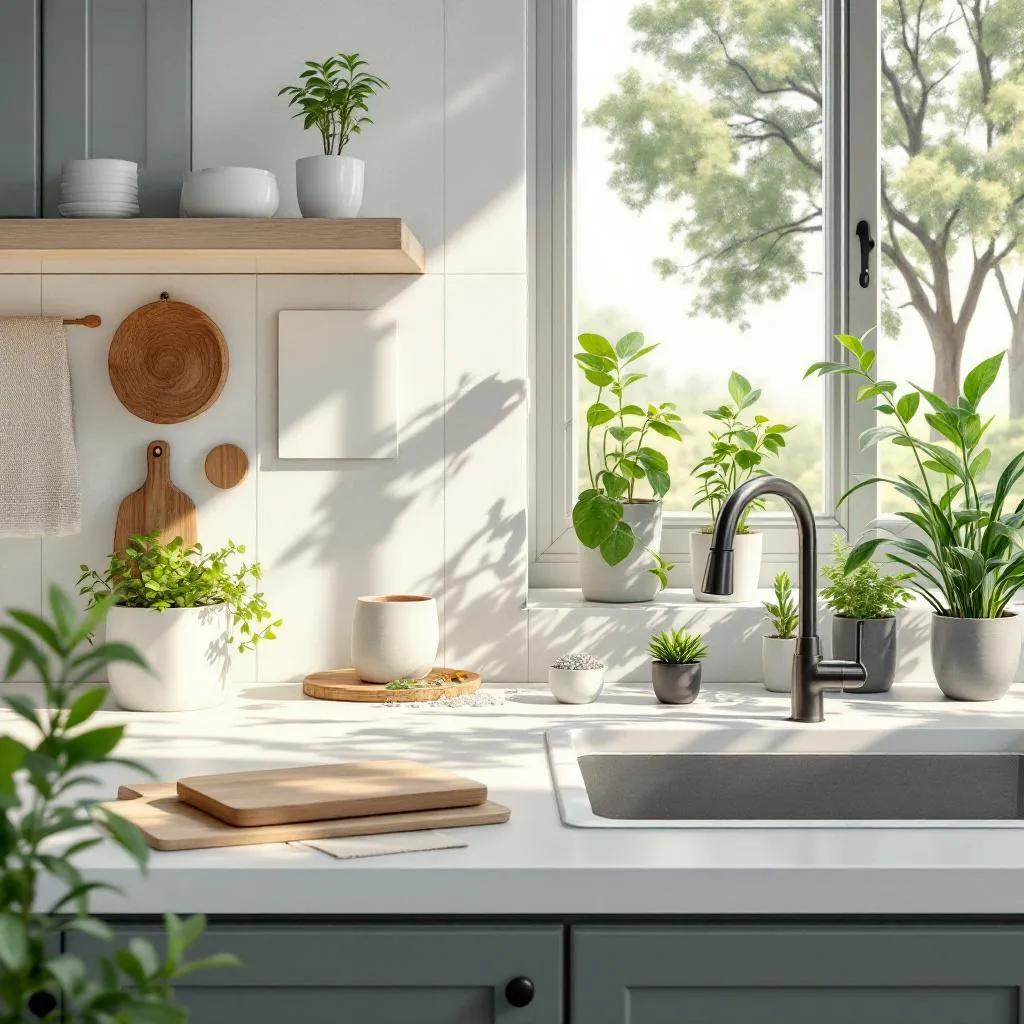
As a porcelain countertop expert working with homeowners in Thousand Oaks and the surrounding communities, I often get asked whether a Porcelain Countertop is truly an environmentally responsible choice. That question is natural as more families aim to make greener decisions for their kitchens and baths. In this piece I’ll walk through the manufacturing realities, lifespan benefits, maintenance implications, and end-of-life considerations for porcelain, all through the lens of local conditions in Thousand Oaks, CA and nearby Los Angeles communities.
Porcelain Countertop: How it’s made and why that matters
Understanding the environmental impact begins at production. Porcelain slabs are made from refined clays and minerals that are formed and fired at very high temperatures. That firing process does consume significant energy, yet modern manufacturers have reduced emissions through improved kiln efficiency and by using cleaner energy sources. The material’s composition is inert and free of volatile organic compounds, which means fewer indoor air quality issues once installed. When I explain this to clients, I emphasize the trade-off between upfront energy use and long-term durability: a well-produced porcelain surface often avoids the repeated resource costs that come with replacing or extensively treating other surfaces.
Durability, longevity, and lifecycle benefits
One of the strongest environmental arguments for porcelain is its longevity. Porcelain is highly resistant to scratches, stains, heat and UV exposure, so it rarely needs replacing. In Thousand Oaks and Los Angeles, where sunlight and occasional heat can challenge some materials, porcelain maintains color and structural integrity better than many natural stones or laminates. Fewer replacements over decades translate into lower cumulative environmental impact. From a lifecycle perspective, a long-lasting product that requires minimal maintenance can offset the initial energy used in production.
Maintenance, cleaning, and household impact
Porcelain’s low maintenance requirements are another ecological plus. It does not require chemical sealers or frequent special treatments; routine cleaning with mild soap and water is typically sufficient. That reduces the household’s use of potentially harmful cleaning chemicals, which is an often-overlooked environmental consideration. For my Thousand Oaks clients, who appreciate both practical upkeep and a material that stands up to family life, porcelain offers a balance of performance and minimal environmental burden from day-to-day care.
Recyclability and end-of-life scenarios
No material is perfectly circular yet, but porcelain has some advantages. Broken or offcut porcelain can sometimes be repurposed as aggregate in construction or landscaping projects. While municipal recycling streams are limited for large slabs, the inert nature of porcelain means it does not leach harmful substances into the environment if it ends up in a landfill. In discussions with local contractors, I encourage creative reuse plans and proper disposal practices to reduce the environmental footprint at end of life.
Comparing porcelain to other materials in a regional context
When homeowners compare porcelain to granite, quartz, or laminate, they are weighing factors like mining impact, resin use, transport emissions, and maintenance. Natural stone requires quarrying and significant transport in many cases, and engineered quartz contains resin binders. Laminate has a shorter lifespan and is less repairable. Porcelain often sits in the middle: manufacturing energy is notable, but lower maintenance, excellent longevity, and resistance to environmental degradation can make it a more sustainable choice over the long run—especially for residents of Thousand Oaks, CA who value durable finishes that cope well with regional climate variations.
Local sourcing, installation, and contractor practices
Another key to minimizing impact is local sourcing and smart installation methods. Choosing slabs that are shipped in consolidated loads, working with local fabricators who reduce transport miles, and hiring experienced installers to minimize waste all matter. I routinely advise clients to ask suppliers about slab origins and to plan layouts that optimize material yield. When installed correctly, porcelain contributes less waste and fewer callbacks, which keeps the overall environmental cost down.
Addressing common concerns and misconceptions
People often worry that porcelain is cold, brittle, or limited in style. Modern fabrication techniques produce large-format, thin slabs that are remarkably stable and versatile, and finishes now replicate natural textures convincingly. Some homeowners also believe porcelain cannot be repaired; while repairs are specialized, many typical issues are avoidable with correct installation and appropriate support for large spans. If sustainability is your priority, these quality improvements mean you avoid replacement cycles that can increase environmental burdens.
Frequently Asked Questions
Q: Is a Porcelain Countertop environmentally better than granite? A: It depends on the full lifecycle. Porcelain’s production energy is high, but its durability, low maintenance, and inert composition can make it a greener option over decades when compared to quarried stone with high transport and extraction impacts.
Q: Can porcelain slabs be recycled or reused? A: While curbside recycling is not typical for slabs, offcuts and broken pieces can sometimes be repurposed as aggregate or in landscaping. Ask your fabricator about reuse options in the local construction network.
Q: Will porcelain glazing or finishes release VOCs into my home? A: High-quality porcelain countertops are fired and cured, making them inert with no ongoing VOC emissions. That’s one of the reasons clinicians and homeowners appreciate porcelain for indoor environments.
Q: How does maintenance affect environmental impact? A: Minimal maintenance reduces the need for chemical cleaners and sealing products, lowering household chemical use and overall environmental burden over time.
For homeowners in Thousand Oaks and the greater Los Angeles area who are weighing aesthetics, performance, and environmental responsibility, porcelain frequently emerges as a smart, practical option. If you’d like to see samples or talk through how a Porcelain Countertop would perform in your home, I’m happy to provide an on-site consultation tailored to local conditions and your sustainability goals.
If you’re ready to explore options, schedule a visit and let me show you real installations that balance beauty and environmental care. A well-chosen Porcelain Countertop can be a lasting investment in both your home’s style and its environmental footprint.
2300 Corporate Center Dr, Thousand Oaks, CA 91320, United States
Phone: +1 +(805) 375-2771