
Homeowners in Oak Park, CA, frequently ask about the difference between a quartzite countertop and quartz, especially when planning a kitchen or bathroom remodel. The confusion is understandable. The names sound similar, and both materials are popular for high-end surfaces. However, they are fundamentally different in composition, performance, and long-term behavior.
Understanding these differences helps homeowners choose a surface that fits their lifestyle, design goals, and expectations for durability.
Quartzite Countertop: A Natural Stone Formed by Nature
A quartzite countertop is made from quartzite, a natural stone formed when sandstone is exposed to extreme heat and pressure over millions of years. This geological process creates an exceptionally hard and dense material.
In Oak Park homes, quartzite is often selected for its natural beauty and strength. Each slab is unique, featuring organic veining, movement, and color variations that cannot be replicated. No two quartzite countertops look the same, which appeals to homeowners seeking a one-of-a-kind surface.
Because it is a natural stone, quartzite must be quarried, cut into slabs, and professionally fabricated before installation.
How Quartz Is Manufactured and Why It’s Different
Quartz countertops are engineered surfaces. They are made by combining crushed natural quartz with resins and pigments. This manufacturing process creates a uniform, non-porous slab designed for consistency and ease of maintenance.
Quartz offers predictable color and patterning, which works well for homeowners who prefer a controlled, modern aesthetic. Unlike quartzite, quartz does not form naturally as a slab; it is created in a factory environment.
This difference in origin affects not only appearance but also performance and long-term care.
Durability and Heat Resistance Compared
One of the biggest differences between quartzite and quartz is heat resistance. Quartzite is highly heat-resistant and can tolerate hot cookware better than quartz. This makes it an excellent choice for active kitchens in Oak Park where cooking is frequent.
Quartz, while durable, contains resins that can be damaged by extreme heat. Trivets and heat pads are recommended to prevent surface damage.
Both materials resist scratches well, but quartzite generally ranks higher on the hardness scale due to its natural stone composition.
Maintenance and Care Expectations
A quartzite countertop requires sealing because it is a natural stone and can absorb liquids if left unprotected. Periodic resealing helps prevent staining and preserves the surface over time.
Quartz, on the other hand, does not require sealing. Its non-porous nature makes it highly resistant to moisture, bacteria, and staining with minimal maintenance.
Homeowners in Oak Park must decide whether they prefer the ease of engineered quartz or the natural authenticity of quartzite with its maintenance requirements.
Design Differences and Visual Impact
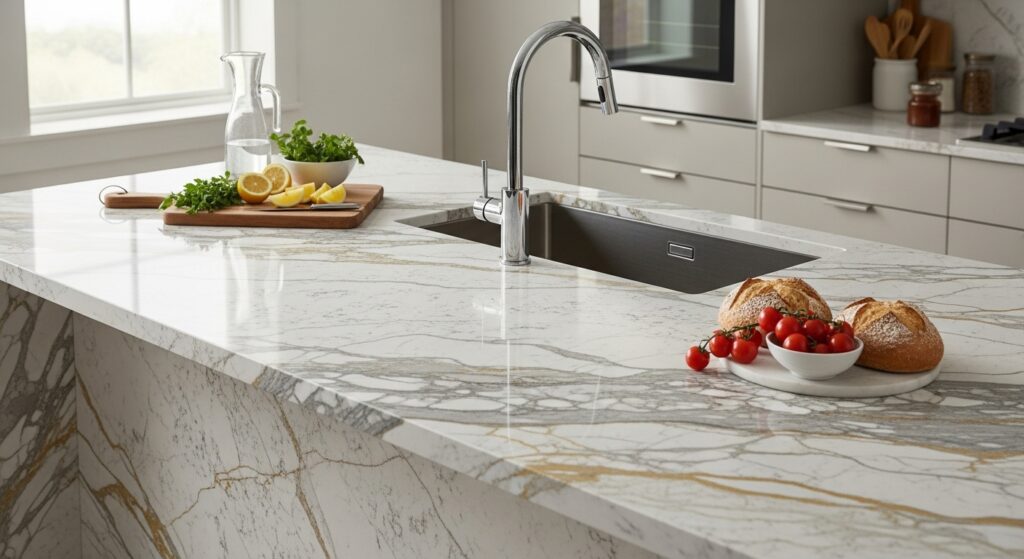
Visually, quartzite often resembles marble, with dramatic veining and depth, but it offers greater durability. This makes it a popular option for homeowners who love marble aesthetics but want better performance.
Quartz delivers a more consistent appearance. While modern designs can closely mimic natural stone, quartz does not provide the same organic variation or depth found in quartzite.
Design preference plays a major role in choosing between the two materials.
Cost and Long-Term Value Considerations
Quartzite countertops are often more expensive than quartz due to quarrying, transportation, and fabrication complexity. However, many homeowners see this as an investment in natural beauty and long-term durability.
Quartz may offer cost predictability and lower maintenance expenses, which appeals to homeowners focused on convenience and uniformity.
Both materials can add value to Oak Park homes when selected and installed properly.
Frequently Asked Questions About Quartzite Countertops
Is quartzite a natural stone?
Yes. Quartzite is a natural stone formed through geological processes.
Is quartzite harder than quartz?
Yes. Quartzite is generally harder and more heat-resistant.
Does quartzite stain easily?
It can stain if unsealed, but proper sealing significantly reduces this risk.
Which is better for kitchens, quartz or quartzite?
Quartzite is better for heat resistance, while quartz is easier to maintain.
Is quartzite suitable for Oak Park homes?
Yes. It performs well in California kitchens when properly sealed and maintained.
Choosing the Right Surface for Your Home
So, what is a quartzite countertop and how is it different from quartz? The answer lies in origin, performance, maintenance, and design character. Quartzite offers natural beauty and strength formed by nature, while quartz provides engineered consistency and low maintenance.
For homeowners in Oak Park, CA, comparing these materials, seeing slabs in person and discussing real-world use is the best way to make an informed decision. The right choice depends on how you cook, how much maintenance you’re comfortable with, and the visual statement you want your space to make.
Arena Marble & Granite helps homeowners understand the true differences between quartzite countertops and quartz, guiding them toward surfaces that match their lifestyle and design vision with confidence.