
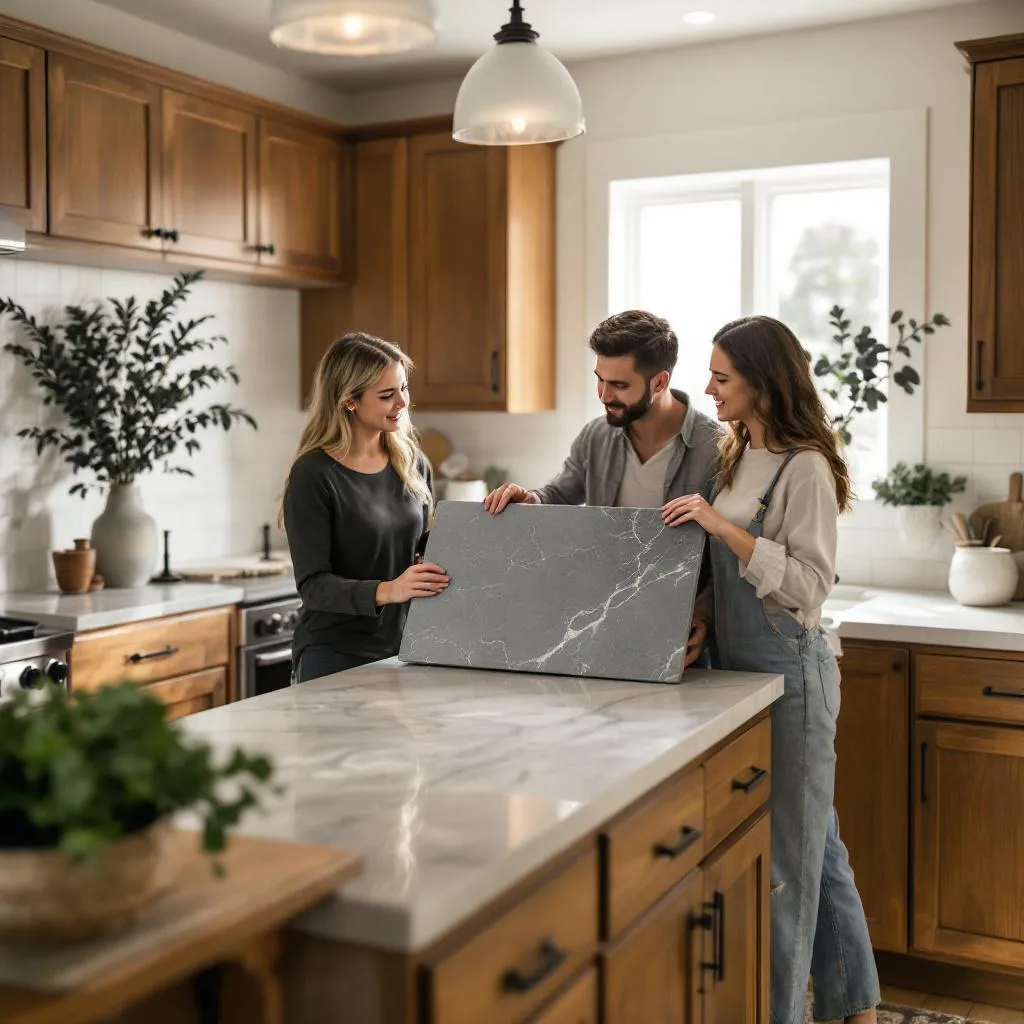
As someone who has worked with homeowners, designers, and contractors across Thousand Oaks for over a decade, I often get asked about Soapstone Countertops and whether they make sense for local kitchens and bathrooms. The answer isn’t a simple yes or no; it depends on how you live, cook, and care for surfaces. In this piece I’ll share hands-on observations from installations in Thousand Oaks and nearby communities, explain practical benefits and trade-offs, and help you weigh whether this material fits your style, maintenance tolerance, and long-term expectations.
What makes soapstone different and why it matters in Thousand Oaks
Soapstone is a dense, non-porous metamorphic rock prized for its silky feel and natural, muted appearance. Unlike quarried granites and engineered quartz, soapstone has a softer, slightly warm texture and subtle veining that deepens with exposure over time. For many Thousand Oaks homeowners who prefer a calmer, more organic aesthetic, soapstone brings a timeless, understated elegance. Its chemical resistance and low porosity mean it handles acidic spills—common in kitchens—much better than some other natural stones, which is a practical advantage for families who cook frequently or use citrus and vinegar in food preparation.
Soapstone Countertops: Pros and Cons for Thousand Oaks Homes
One of the strongest benefits of soapstone is durability in everyday use. It resists stains and reacts differently to heat than alternatives, so hot pans briefly placed on its surface are less likely to cause damage. Because it’s relatively soft compared to granite, the surface can develop shallow scratches or a worn look in high-traffic kitchens; many owners embrace this as patina that adds character, while others choose to sand and mineral oil the stone occasionally to refresh its appearance. In coastal-influenced microclimates near Thousand Oaks and Los Angeles, soapstone’s non-porous nature can be an asset for longevity, though you should consider how the stone’s natural darkening with age aligns with your design goals.
From a performance standpoint, soapstone is low-maintenance compared with porous stones that require frequent sealing. It’s naturally resistant to bacteria and most household chemicals, which makes it attractive for busy households and those prioritizing food safety. On the flip side, if you want a high-gloss, reflective countertop, soapstone’s matte, satin surface may not deliver the modern sheen some homeowners expect. Additionally, because soapstone is softer, it can chip at exposed edges if struck forcefully; however, chips are often easier to repair invisibly than fractures in harder stones.
Design flexibility and pairing with Thousand Oaks interiors
Designers in the Conejo Valley often choose soapstone for kitchens that aim for warmth, a farmhouse vibe, or a timeless transitional look. The stone’s subtle veining and range of gray tones are forgiving when paired with warm wood cabinetry or off-white painted finishes, and it complements both vintage and contemporary hardware. For small kitchens common in many Thousand Oaks homes, the depth and consistency of soapstone can visually anchor the space without creating harsh contrasts. If you’re considering integrating the material into a larger remodeling plan, it pairs well with warm metals and textured backsplashes to create depth without overwhelming natural light or the size of the room.
Practical installation considerations also matter: because soapstone tends to be cut from smaller blocks than granite, seams may be slightly more visible in very large countertop runs. For many homeowners, that subtle seam becomes part of the handcrafted appeal; for others, planning layout and seam placement with an experienced installer helps minimize visual impact. When you evaluate samples at home, observe how the stone reacts under your lighting—soapstone can appear richer and more unified in the soft, indirect light typical of many Thousand Oaks interiors.
Maintenance and long-term care
Maintaining soapstone is straightforward. A routine of gentle cleaning with mild soap and water keeps the surface looking fresh. Many homeowners choose periodic applications of mineral oil to even out the patina and deepen color; this is a cosmetic preference rather than a necessity for protection. When small scratches appear, light sanding and re-oiling can restore a smooth surface. Because of these simple care steps, soapstone tends to be forgiving for those who want durability without a burdensome upkeep routine, especially appealing to busy families and professionals in Thousand Oaks and neighboring Los Angeles communities.
For those who prefer minimal intervention, allowing the stone to age naturally creates a soft, lived-in surface that many find charming. If you anticipate heavy use or a preference for a perfectly uniform sheen, discuss finishing options with a fabricator—different finishes can slightly alter the stone’s resistance to showing wear.
FAQ
Is soapstone heat resistant?
Yes. Soapstone has excellent heat resistance compared with many countertop materials. Brief contact with hot pans is generally safe, but I still recommend using trivets or hot pads to avoid thermal shock on edge details and to preserve sealants or oils you may use.
How do I repair scratches or chips?
Minor scratches are often removed with light sanding using fine-grit sandpaper followed by reapplication of mineral oil to blend repairs. Chips at edges can be filled and smoothed by a trained stone worker; repairs are typically subtle because soapstone accepts blending well.
Will soapstone stain or harbor bacteria?
Because soapstone is low in porosity, it doesn’t absorb liquids the way some stones do, and it resists staining and bacterial growth better than porous materials. Regular cleaning with mild detergent is usually sufficient to keep the surface hygienic.
Can I get soapstone in different colors?
Natural soapstone primarily ranges from gray to deep charcoal, sometimes with green or blue undertones depending on the quarry. It darkens over time and with oils, but it’s less varied in color than engineered quartz or exotic granites, which some homeowners view as an advantage for creating a cohesive design.
When deciding if Soapstone Countertops are right for your Thousand Oaks or Los Angeles area home, think about how you use the space, how much maintenance you want, and the aesthetic you’re trying to achieve. If you value a tactile, natural surface that develops character and pairs well with warm, organic interiors, soapstone is an excellent candidate. For homeowners seeking a glossy, hard-wearing surface with uniform patterns, other materials may be a better fit.
If you’d like to see real installations, examine samples in varied light, or discuss layout and edge options, I’m happy to walk through choices and help you determine whether Soapstone Countertops fit your remodeling goals. Contact us to schedule a consultation and see how this material performs in Thousand Oaks kitchens and baths. Soapstone Countertops
2300 Corporate Center Dr, Thousand Oaks, CA 91320, United States
Phone: +1 +(805) 375-2771