
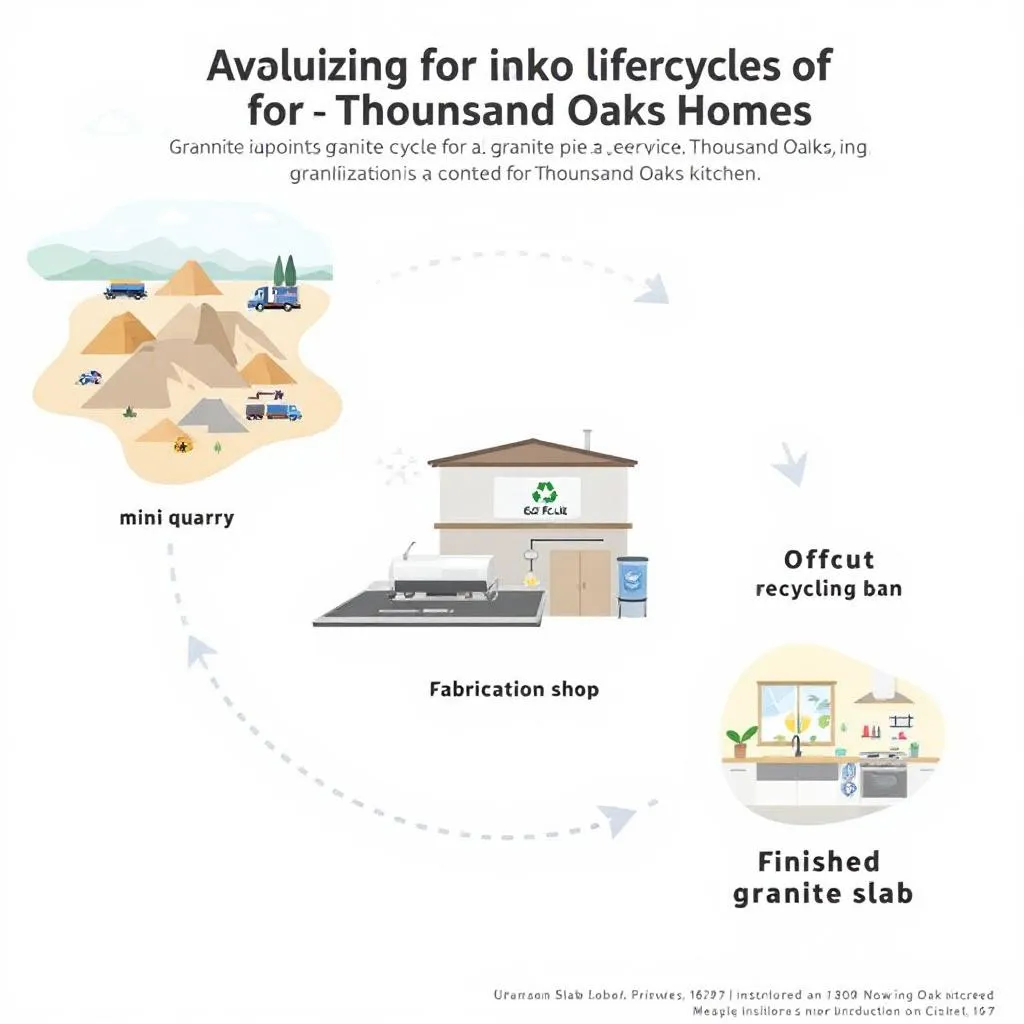
As someone who has worked with stone for decades in and around Thousand Oaks, I often get asked about the environmental side of choosing a Granite Countertop. Homeowners want surfaces that last, look beautiful, and feel responsible. In this introduction I’ll share what I’ve learned about quarrying, transport, installation, and the long-term footprint of natural stone so you can make informed decisions for your kitchen or bath.
Granite Countertop: Environmental Considerations in Thousand Oaks
Granite is a natural, durable material that often outlives many synthetic alternatives. When evaluating environmental impact, the conversation starts at the quarry. Quarrying itself disturbs land and uses energy, but the scale and regulation of that activity vary widely. In Southern California, including Thousand Oaks and the greater Los Angeles area, careful sourcing and transparency from suppliers can reduce hidden impacts. I encourage homeowners to ask about where the stone was quarried and what reclamation practices were followed.
Energy, Transportation, and Local Sourcing
One of the largest environmental factors for any heavy material is transportation. Shipping massive slabs across oceans and then trucking them across states adds greenhouse gas emissions. That is why local sourcing and choosing suppliers who consolidate shipments matters. A stone that’s quarried and finished closer to Thousand Oaks will generally have a lower transportation footprint. As a professional, I help clients weigh the benefits of a particular aesthetic against the environmental cost of moving heavy materials long distances.
Durability, Longevity, and Maintenance
Durability is an often overlooked environmental benefit. A long-lasting Granite Countertop resists chips, heat, and everyday wear in a way that reduces the need for replacements and the waste associated with them. Regular sealing and proper care extend that life further. While the initial impact of quarrying and fabrication exists, the decades of service a granite surface can provide often balance those upfront costs. In homes I’ve worked on in Thousand Oaks, clients who commit to proper maintenance rarely consider a replacement other than for a design update.
Fabrication, Waste, and Responsible Practices
Fabrication produces offcuts and dust. Reputable fabricators reclaim and recycle these byproducts, turning them into aggregate or using dust control systems to avoid releasing fine particulates. When selecting a fabricator, ask about their waste handling, water recycling, and dust suppression systems. Responsible shops in the Los Angeles supply chain can make significant differences in the net environmental impact of a project.
Sustainable Alternatives and Complementary Choices
If your priority is minimizing environmental impact, there are strategies beyond selecting the stone itself. Reusing existing cabinets, choosing recycled materials for backsplashes, or selecting locally quarried stone cuts down on new resources. You can pair granite with energy-efficient appliances and low-VOC finishes to create an overall greener kitchen. For many clients, the blend of natural stone’s longevity and smart complementary choices delivers a practical, sustainable result. If you’re comparing options, I can show the lifecycle strengths of granite relative to engineered materials and how those choices play out in Thousand Oaks and nearby Los Angeles neighborhoods.
Midway through a planning conversation I often point homeowners to a trusted product so they can visualize the finish and care requirements. For appliance designers and homeowners who want to see a real example of craftsmanship and sourcing transparency, consider this resource: Granite Countertop. Reviewing a sample with a fabricator clarifies the environmental and aesthetic trade-offs in a tangible way.
Local Regulations and Community Impact
Local regulations in Ventura County and Los Angeles County influence how stone is quarried, transported, and installed. Zoning, truck route restrictions, and environmental compliance all shape the footprint of a project. Working with a local installer knowledgeable about Thousand Oaks codes minimizes surprises and reduces inefficient trips. Community-minded fabricators also contribute to local employment and often participate in recycling and reclamation programs, which helps offset the initial impacts of stone extraction.
Frequently Asked Questions
Q: Does a Granite Countertop have a bigger environmental impact than engineered stone? A: It depends on the metrics. Granite’s extraction is intensive initially, but its longevity and low maintenance often give it a lower lifetime impact than some engineered products that may contain resins or require replacement sooner.
Q: How can I reduce the footprint of a granite installation? A: Choose locally sourced stone when possible, work with fabricators who recycle waste and water, and plan shipments to minimize transport. Retaining existing cabinetry and reducing demolition waste also helps.
Q: Are there certifications to look for? A: There are sustainability programs and supplier transparency initiatives that indicate responsible quarrying and processing. Ask suppliers for environmental statements and evidence of reclamation or community investment.
Q: How long will a granite countertop last in a busy kitchen? A: With proper sealing and basic care, it can last several decades. Many homeowners in Thousand Oaks keep their granite for a lifetime and only change it for stylistic updates.
Q: Should I be concerned about stone dust and waste during fabrication? A: Only if the fabricator lacks proper controls. Choose a shop that uses dust collectors, water recycling, and responsible disposal or reuse of offcuts.
Thinking through the full life of a countertop — from extraction to installation to eventual reuse or disposal — is the most honest way to measure environmental impact. My role is to guide clients in Thousand Oaks and Los Angeles through those trade-offs with practical advice and transparent sourcing.
When you’re ready to see samples, compare finishes, or discuss sourcing options, I invite you to reach out and explore real examples, starting with trusted suppliers like Granite Countertop. I’ll help you balance beauty, durability, and environmental responsibility so your next project fits your values and your home.
Dr. Ahdout
2300 Corporate Center Dr, Thousand Oaks, CA 91320, United States
Phone: Find us on Google Maps