
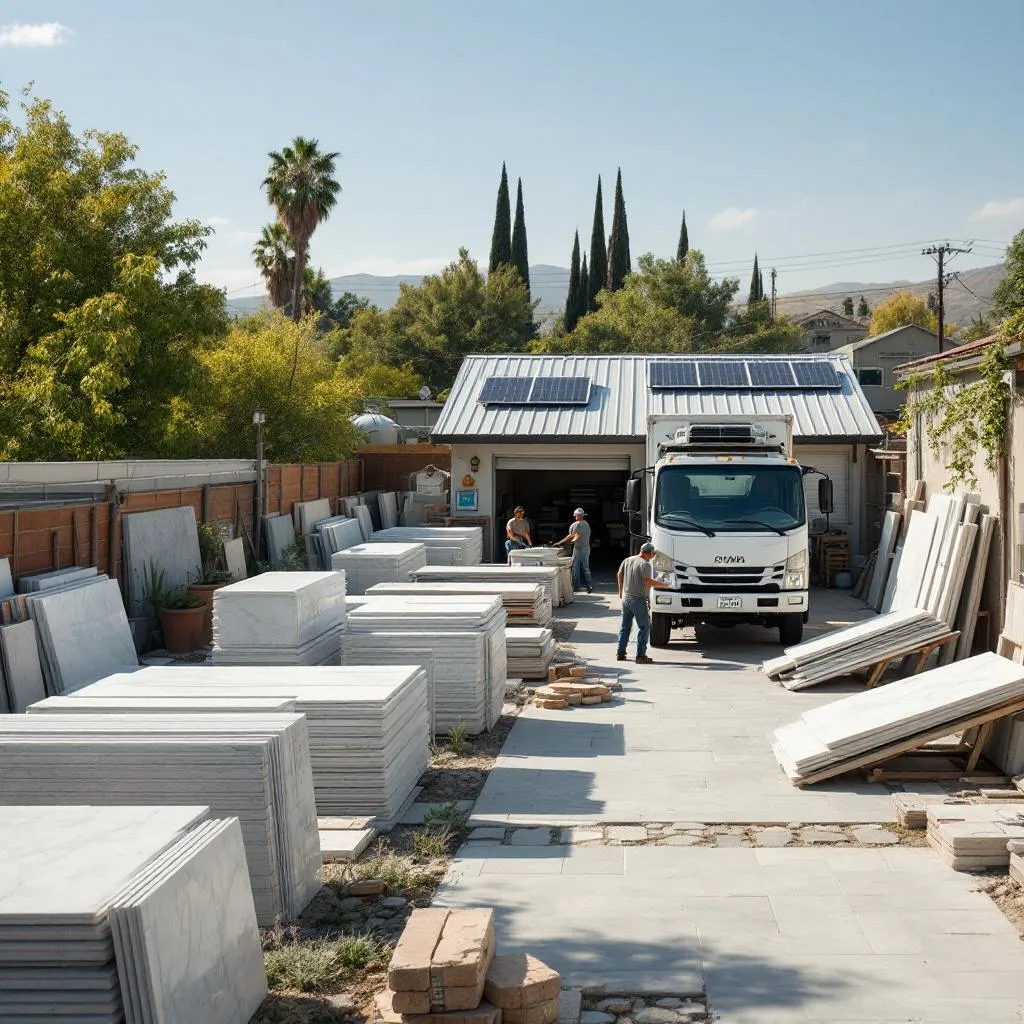
As a local expert who has installed and studied stone surfaces across Thousand Oaks and neighboring communities, I often hear homeowners ask about the environmental trade-offs of choosing a Marble Countertop. That question reflects a growing interest in sustainable building choices and a desire to balance beauty with responsibility. In this article I’ll walk through the life cycle of marble, practical ways to reduce its footprint, and what homeowners in Thousand Oaks, CA should consider when planning kitchen or bath renovations.
Marble Countertop: quarrying, transport, and embodied energy
Marble begins its journey deep in the earth. Quarrying is the earliest and most visible environmental impact: land disturbance, habitat disruption, and water use can be significant when blocks of stone are extracted. Once quarried, blocks are processed into slabs at facilities that may be many miles from the source; milling and finishing consume energy and water. Transport adds another layer of impact, especially when stone is imported from overseas. For homeowners in Thousand Oaks, CA the embodied energy of a Marble Countertop can vary widely depending on where the slab originates, how it’s processed, and how efficiently the supply chain is managed.
Durability, longevity, and lifecycle benefits
One of marble’s environmental advantages is its longevity. Properly specified and maintained, a marble surface can last for decades or even generations. That durability reduces the need for replacement materials, cutting the long-term environmental cost compared with shorter-lived alternatives. In practice, the lifecycle benefits of a Marble Countertop are most fully realized when the stone is installed with attention to care, when local fabricators are used to minimize transport, and when homeowners choose finishes that extend wear resistance.
Water, waste, and local considerations in Thousand Oaks
Water usage during fabrication and cutting is a notable concern, particularly in Southern California’s dry climate. Responsible fabricators reclaim and recycle water during cutting and polishing; asking about those practices is a practical way to reduce environmental impact. Waste management is another local factor. Offcuts and damaged pieces can be repurposed as tiles, accent pieces, or exterior cladding, which keeps materials out of the landfill. Choosing local suppliers and installers in Thousand Oaks and nearby Los Angeles County shrinks transport emissions and supports businesses that may already follow greener fabrication methods.
Surface treatments, maintenance, and indoor air quality
Surface treatments for marble—sealants, honing, and polishing—affect both performance and environmental profile. Low-VOC sealants and finishes help preserve indoor air quality, an important consideration for families with young children or respiratory sensitivities. Regular maintenance with gentle, ph-neutral cleaners prevents heavy chemical use over time and preserves the stone’s appearance without introducing harmful substances into the home or watershed.
Recycling, reclamation, and end-of-life options
At the end of a countertop’s useful life, marble can be reclaimed or recycled in several ways. Larger pieces may be reused in new projects, while smaller offcuts can serve as mosaic elements, garden edging, or aggregate in construction. Some local fabricators accept returns or buy-back options for salvageable material, reducing landfill burden. Considering potential end-of-life outcomes when you select a slab helps close the loop and aligns the Marble Countertop choice with circular-economy principles.
Community impact and choosing responsibly in Thousand Oaks
Choosing a Marble Countertop responsibly means asking questions: Where was the stone quarried? Does the fabricator use recycled water? Can offcuts be repurposed? Working with local showrooms and installers in Thousand Oaks often makes it easier to verify sustainable practices and to ensure shorter transport distances. Additionally, local reclamation networks and stone yards sometimes offer slabs from decommissioned projects, which can deliver exceptional character while lowering the environmental toll.
Practical tips for homeowners considering marble
When advising clients, I recommend prioritizing local sourcing, asking about water recycling, and choosing finishes that reduce the need for harsh cleaners. Consider lighter-weight design decisions that minimize material use and request that fabricators salvage offcuts for future use. These small choices can compound into meaningful reductions in environmental impact while preserving the natural elegance that marble brings to kitchens and baths in Thousand Oaks and the broader Los Angeles area.
Frequently Asked Questions
Q: Is marble worse for the environment than engineered stone? A: It depends on the metrics used. Marble has natural extraction impacts but often lower chemical processing than engineered quartz. Lifecycle analysis that accounts for sourcing, transport, and longevity provides the best comparison.
Q: Can a Marble Countertop be recycled? A: Yes. Marble can be reclaimed or repurposed into new installations or crushed for use as aggregate. Local fabricators and salvage yards are good resources to explore reclamation.
Q: How can I reduce the environmental impact of my countertop project? A: Choose locally sourced stone, ask fabricators about water recycling and waste reuse, select durable finishes, and plan designs that minimize offcuts.
Q: Are there certifications to look for? A: While stone lacks a single universal “eco” label, responsible suppliers will share sourcing information and environmental practices. Sustainability can often be confirmed through transparent supply-chain answers.
In closing, if you value the aesthetic and tactile qualities of natural stone but want to limit environmental harm, thoughtful choices make all the difference. From selecting local fabricators to prioritizing reclaimed material, homeowners in Thousand Oaks and greater Los Angeles can enjoy the beauty of a Marble Countertop while reducing their footprint.
If you’re planning a remodel and want expert guidance on sustainable marble selection, installation, and long-term care, reach out to discuss options and next steps. A well-informed Marble Countertop decision can deliver lasting beauty and better environmental outcomes for your home in Thousand Oaks, CA.
Dr. Ahdout
2300 Corporate Center Dr, Thousand Oaks, CA 91320, United States
Phone: Find us on Google Maps