
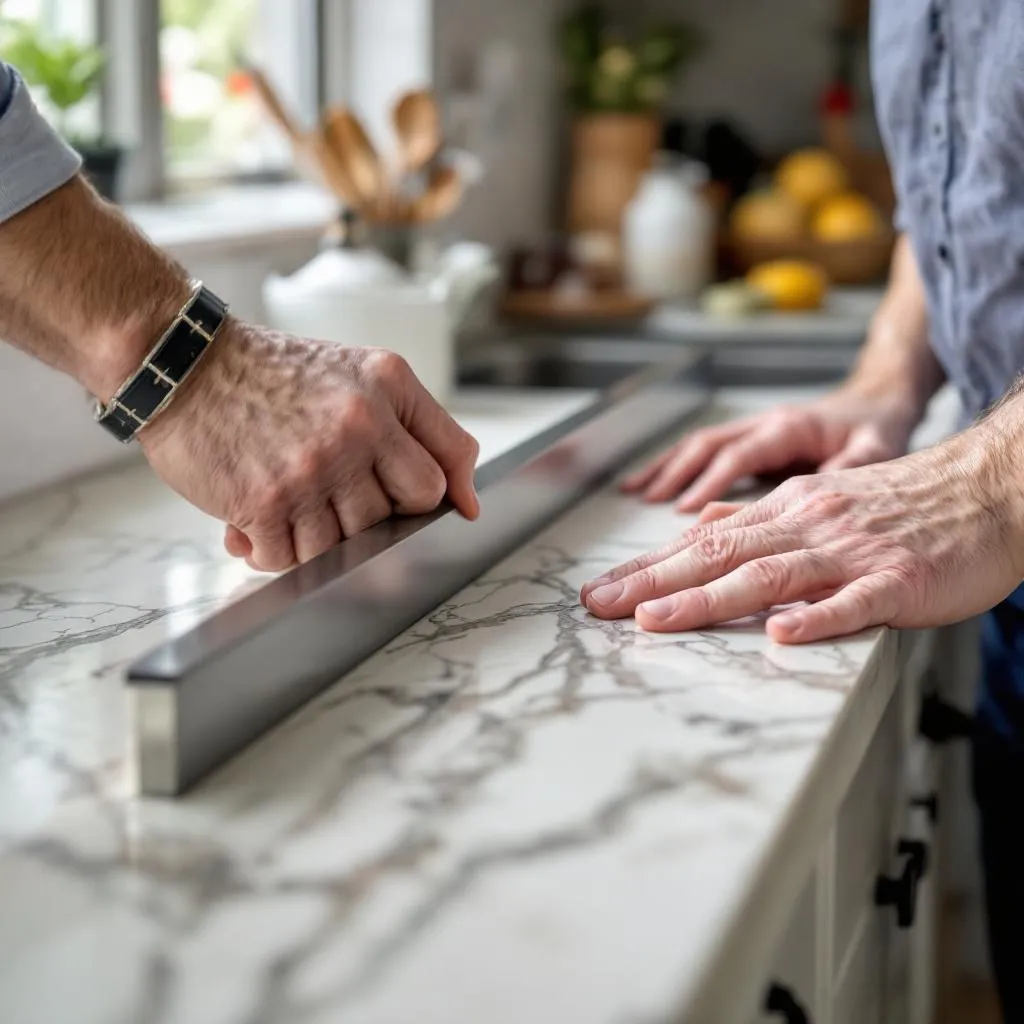
As a local expert who has spent years working with homeowners across Thousand Oaks and nearby communities, I know the pride and concern that come with choosing and maintaining a Quartzite Countertop in your home. Quartzite is prized for its natural beauty and durability, but it also requires a careful eye during inspection to ensure longevity and performance. In this guide I’ll walk you through practical checks and professional insights so you can feel confident about the condition of your stone.
Quartzite Countertop: Understanding the material
Quartzite is a natural stone formed from sandstone and subjected to heat and pressure, which makes it harder than many other stones commonly used in kitchens. Its crystalline structure gives it a bright, glassy sheen in places and extraordinary resistance to heat and scratches, but it can also be porous and reactive to certain cleaning agents depending on how it was finished. Knowing what quartzite is and how it behaves will help you recognize when it is performing as expected versus when it needs attention.
What to look for during a visual inspection
Begin with an overall visual sweep. Look at the slab from several angles under consistent light to understand the pattern and to spot any color inconsistencies that might indicate different batches or repairs. Pay special attention to seams where two pieces meet; good installation will have tight seams with adhesive that is color-matched and not overfilled. Small surface pits or natural fissures are common in quartzite, but deep cracks or areas that feel unstable to the touch may signal structural issues that require a professional’s assessment.
Surface tests and practical checks
A few simple, non-invasive checks can tell you a lot. Run your hand over the surface to detect unevenness, then place a straight edge along the counter to see if it rocks or bows. Test the edges and backsplashes—these are often overlooked during routine care but are frequent sources of chips or improper sealing. If you have a scratched or dull spot, test how it responds to a gentle polishing cloth; certain finishes may regain sheen with careful maintenance while others need a professional refinish.
When you want to verify stain resistance, avoid aggressive or reactive household chemicals. Instead, consult the manufacturer’s or fabricator’s guidelines and, when in doubt, reach out to a trusted local installer to discuss recommended sealers for your slab. If you spot residue from past sealers or cleaners, a professional cleaning will clarify whether stains are superficial or have penetrated the stone.
For homeowners curious about long-term durability, I often recommend considering how the countertop was installed and supported. Proper substrate, secure anchoring, and correct overhang support can prevent stress points that lead to cracks over time. If you’ve got a bold grain or dramatic veining, ask the installer whether they reinforced areas near sinks and cooktops; these design choices can affect stability.
Common installation concerns and remediation
Seams and caulking are where installation quality really shows. A well-executed seam will be as inconspicuous as possible, with adhesive that doesn’t discolor or flake. Look for small gaps at the junctions, signs of water infiltration near undermount sinks, and caulk that has pulled away from the wall or countertop. If caulk is failing, moisture can be trapped and lead to mold growth under the counter or swelling in adjacent cabinetry—issues that are easier to address early than later.
Another mid-life concern can be the finish. Some homeowners prefer a honed or matte finish for everyday wear, while others want a polished shine that highlights the stone’s depth. A mismatched area where a repair or replacement slab was cut from another vein can show up under certain lighting; in these cases, an experienced fabricator can advise on blending techniques or, if needed, a more extensive repair plan.
If you’d like a visual comparison or second opinion on a newly installed or aging countertop, I often refer clients to trusted resources and local fabricators who specialize in quartzite. For practical, hands-on inspection tips and professional consultation in our area, consider reading resources from the fabricators I work with, like Quartzite Countertop, which explain standards for seams, sealing, and finishes in clear detail.
Maintenance strategies to keep quartzite performing
Regular maintenance starts with gentle, pH-neutral cleaners and soft cloths. Avoid acidic cleaners like vinegar or citrus-based products, which can dull the surface over time. Resealing may be recommended periodically depending on the stone’s porosity and the sealer product used; a simple water-drop test can indicate when that’s necessary. Small chips and edge damage can often be repaired in place by an experienced stone technician, so don’t assume replacement is the only option.
Consider practical habits that reduce wear: use cutting boards to avoid habitually cutting on the stone, protect hot pots with trivets even though quartzite tolerates heat well, and promptly clean spills to lessen the chance of staining. These habits, along with routine professional checks every few years, will keep your countertop both beautiful and functional for decades.
Frequently Asked Questions
Q: How can I tell if my quartzite is sealed properly?
A: A simple water-drop test helps—place a few drops of water on the surface and watch how it behaves. If water beads, the sealer is doing its job. If the water soaks in or darkens the stone, it may be time to reseal. For a definitive approach, consult a local stone professional who can recommend the right sealer based on the slab.
Q: Is quartzite better than granite for kitchen counters?
A: Both are excellent choices; quartzite tends to be harder and has a different visual character with often brighter, more glassy veins. Granite has a wide range of patterns and is also durable. The right choice depends on the look you want and the specific slab characteristics.
Q: What should I do about a small chip or crack?
A: Small chips are often repairable with resin or color-matched fillers; cracks should be inspected to determine if they are superficial or structural. Early professional intervention can prevent a minor issue from becoming a major repair.
If you’d like a hands-on inspection or tailored recommendations for your home in Thousand Oaks or nearby Los Angeles neighborhoods, I’m available to help. For more detailed guidance and to review industry best practices, check the comprehensive fabrication and care notes at Quartzite Countertop.
As a local specialist, I’m committed to helping homeowners protect their investment in natural stone. If you’re ready for a thorough, expert inspection of your Quartzite Countertop or want advice about maintenance and repairs, reach out and we’ll set up a convenient time to assess your space and recommend next steps. For a trusted local resource and to learn more about service options, visit Quartzite Countertop to start the conversation.
Dr. Ahdout
2300 Corporate Center Dr, Thousand Oaks, CA 91320, United States
Phone: Find us on Google Maps